
Sizing
What Size Dumpster Do I Need in Santa Ana?
Most guides size by the number of rooms. In a city split between 1920s plaster and 1960s drywall, the year the house was built tells you more than the floor plan does.
Start with the material and the era
Almost everyone sizing a container starts by counting rooms. That works for light bulky material and it fails for everything else.
A 1920s bungalow in Washington Square and a 1960s tract house in Santa Anita can have identical floor plans and produce loads that differ enormously in weight. Plaster and lath, clay tile, old-growth timber and stucco are all heavier than the drywall, asphalt shingle and modern framing that replaced them.
So the useful first question is not how big the house is. It is what is coming out of it.
⭐ The four sizes and what they really hold
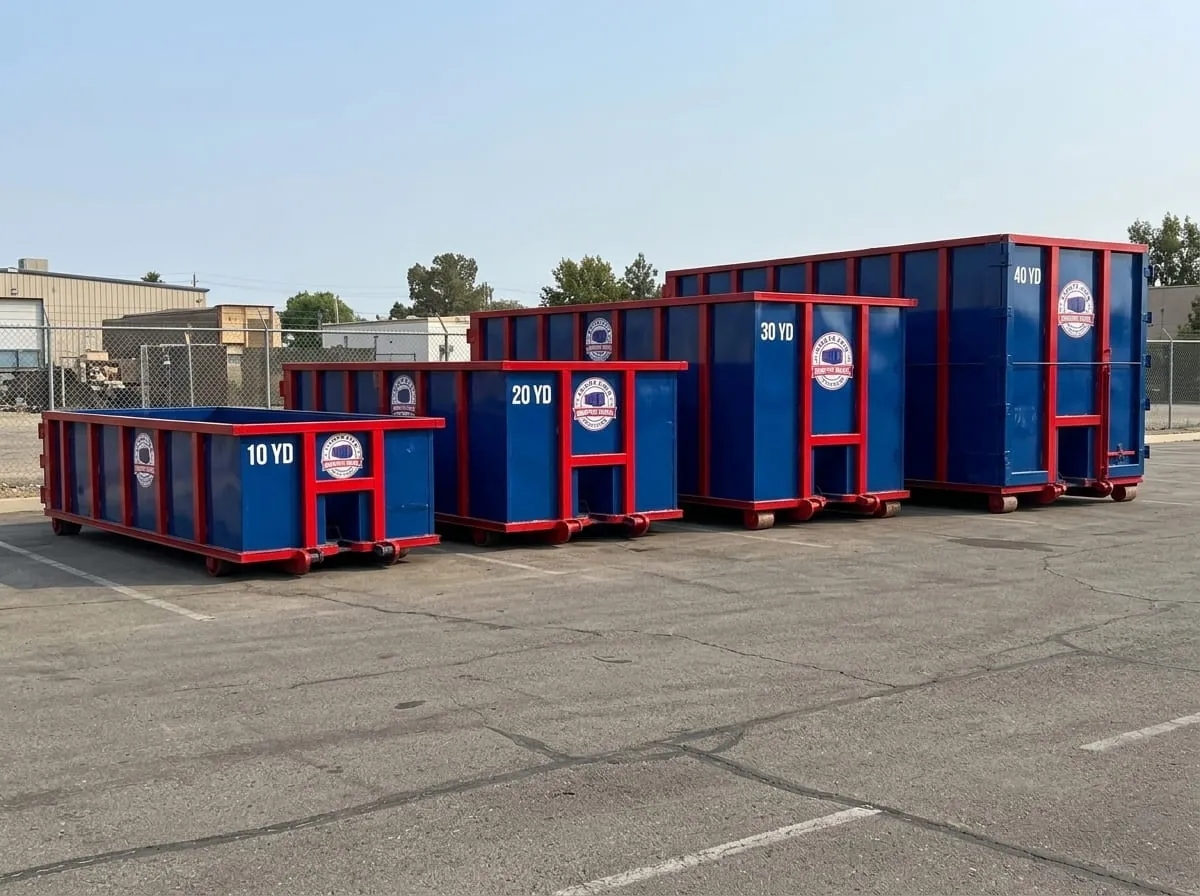
10 yard. The small one, and the one people under-order. It suits a single bathroom, a small kitchen strip-out, a garage clearout — and it is the right box for heavy material: concrete, masonry, tile roofing, stucco. In the historic districts it is often the only size that will physically place.
15 yard. The most under-rated size in the fleet. It holds far more than people expect and still fits a narrow pre-war driveway. For single-room remodels and medium cleanouts across the older half of the city, this is usually the right answer.
20 yard. The default in the post-war tracts. A full-house cleanout, a decent remodel, an asphalt shingle reroof on an average home. If you genuinely do not know, this is the least likely to be wrong — provided the driveway takes it.
30 yard. Construction volume, additions, whole-property clearances, bulky light material. It wants a wide driveway and a straight approach, which the 1950s-70s neighborhoods have and the historic districts generally do not.
⚠️ Why weight stops you before volume does
Disposal is billed by weight and trucks have a legal lifting limit, so dense material runs out of capacity long before it runs out of space.
Plaster and lath from a pre-war interior is the local classic. A whole-house gut in Floral Park or Heninger Park reaches a weight limit in a container that looks a third used.
Clay and concrete roof tile runs several times the weight per square of asphalt shingle. Common on the Spanish Colonial Revival stock across the historic districts.
Concrete, block, brick and stucco are all dense. A driveway or patio tear-out is a small container, part-filled, and often more than one.
Soil is heavy, and heavier again after irrigation.
Sizing a room, a roof and a yard
A kitchen. A 15 yard covers most Santa Ana kitchens. Tile flooring pushes the weight up without changing the volume, so mention it.
A bathroom. A 10 yard, almost always. A cast iron tub or a tiled shower pan broken out adds weight rather than space.
A roof. Asphalt shingle on an average home is a 20 yard. Clay or concrete tile is a 10 yard, part-filled, and usually more than one.
A yard. Green waste is bulky and light, so a 30 yard is often right even on a modest property. Concrete, pavers and soil are the opposite in every respect and want their own small container.
A full house. A 20 yard handles most ordinary cleanouts. Add a garage that has not been used for a car in twenty years and it is a 30.
The driveway is the other half of the answer
Volume and weight decide what you need. The property decides what you can have.
In the post-war tracts the driveways are wide, the approach is straight and a 30 yard is routine. In the historic districts the driveways are narrow, the streets are tight and the mature canopy overhangs the approach — and a roll-off needs real vertical clearance to tip.
Two things always worth mentioning: whether anything overhangs the driveway, and whether the surface is anything other than plain concrete. Timber goes down under the wheels either way, but on pavers or older thin concrete we bring more of it.
⭐ When two smaller loads beat one big one
This sounds like being sold more and it is usually the cheaper route.
A container loaded past its weight limit cannot be lifted. The truck comes, the driver cannot take it, and you pay for the wasted trip plus the labor of pulling material back out by hand. Two 10 yard loads of tile or concrete, each within limits, go first time.
The same logic applies to mixed jobs. If you are stripping a tile roof and also clearing a yard, those are opposite densities. Running the heavy material in one container and the bulky material in another is easier to load, cheaper to dispose of, and — on a permitted job — much better for your diversion figure.
⚠️ The mistakes that cost money here
Sizing by room count. Covered above, and it is the big one in this city.
Assuming you can finish the last bit yourself. ⚠️ You cannot — the county landfill takes no public disposal. Under-ordering here means a second haul, not an afternoon with a pickup.
Forgetting the fill line. Material must sit level with the top rail so the load can be covered. Heaped above it, the container cannot legally travel.
Not mentioning the era of the house. If you tell us 1925, we will ask about plaster and tile. If you tell us 1965, we will probably send you a bigger box than you asked for and it will still be cheaper.
Putting the banned material in. Paint, batteries, electronics and anything with refrigerant have their own routes and a contaminated load is an expensive surprise.
A short way to get it right
Say the street, the rough age of the house, and what the material actually is. “A 1920s bungalow in Washington Square, taking out plaster in two rooms” or “a 1960s tract house in Sandpointe, shingle reroof” gets a confident answer in under a minute.
Then tell us what hangs over the driveway. Between the material and the approach there is usually exactly one right container, and the two-minute conversation is worth more than any size chart.
Need a container in Santa Ana?
Call and describe the job. Three minutes on the phone gets you a size recommendation, a flat rate and a delivery window — and we will tell you if a smaller, cheaper container is the right answer.
Call (714) 360-0701