Materials
What Can and Cannot Go in a Dumpster Here
Most of what comes out of a house goes straight in. California's short list of exceptions is longer than most states' — and every item on it has a proper route.
The good news first
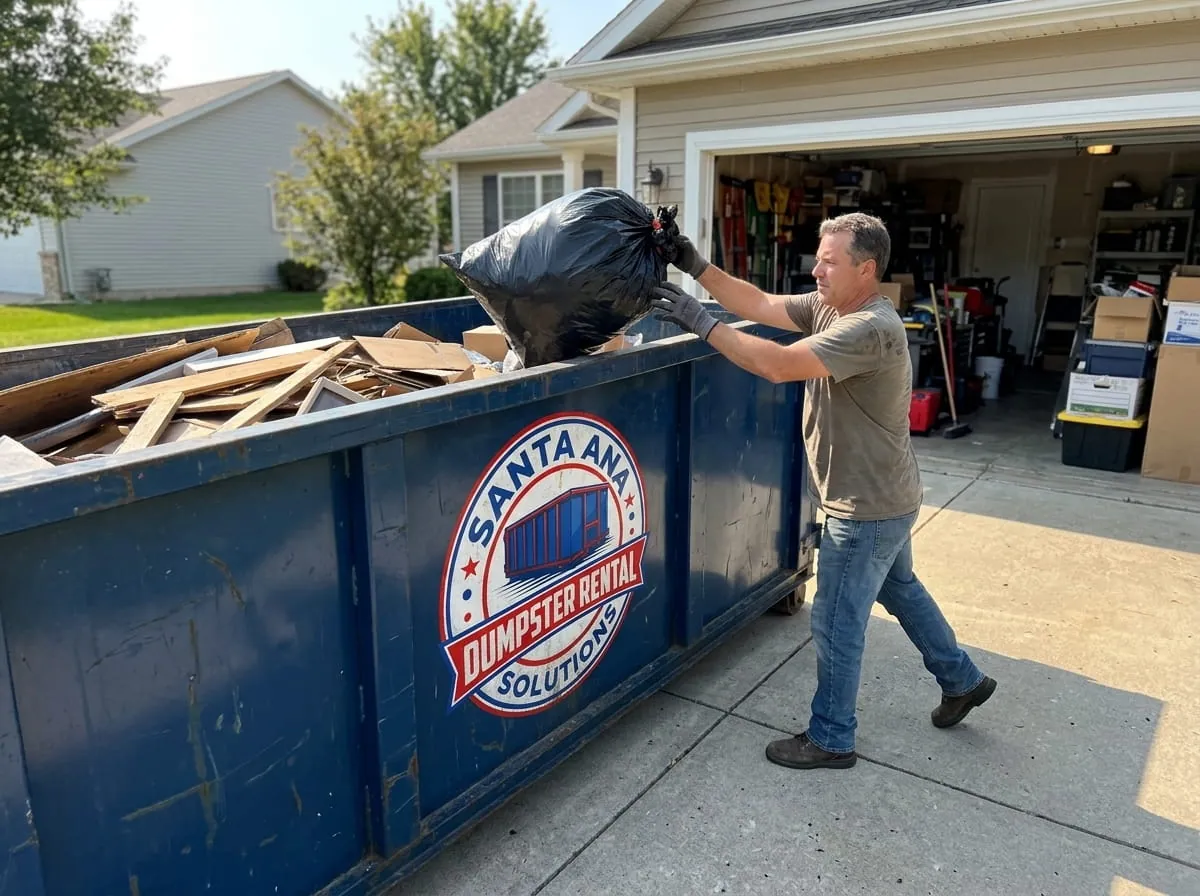
The overwhelming majority of what comes out of a house, a remodel or a job site goes into a roll-off with no thought required.
Furniture, carpet, flooring, drywall, untreated timber, cabinets, counters, doors, windows, fixtures, roofing, stucco, insulation, packaging, general household clutter, clothing, garden furniture, non-hazardous renovation debris and ordinary green waste are all fine.
The exceptions matter though, and California has a few that catch people who have moved here from elsewhere.
⚠️ The prohibited list, and why each one is on it
Paint, stain, solvent and thinner. Liquid, flammable, and a contamination risk to an entire load.
Motor oil, antifreeze, fuel, brake and transmission fluid. All of it.
Pesticides, herbicides, pool and spa chemicals.
Batteries — vehicle, deep-cycle, lithium and ordinary household cells. In California household batteries are universal waste and may not go in the rubbish at all.
Fluorescent tubes, CFLs and any mercury-containing lamp or thermostat. Also universal waste.
Electronics — televisions, monitors, computers. Covered by the state's e-waste rules.
Appliances containing refrigerant — fridges, freezers, air conditioners. The refrigerant must be recovered by someone qualified first. ⚠️ This is the one people miss, because the unit looks like plain scrap metal.
Propane cylinders and any pressurized vessel. Non-negotiable — they explode.
Aerosols.
Tires.
Asbestos. Regulated, and handled by licensed contractors on a separate route. On a pre-1980 house, suspect it and test rather than guess.
Treated wood. Its own section below, because it is the surprise.
Medical waste, sharps and pharmaceuticals.
Anything still wet, running or leaking.
⭐ Where each banned item actually goes in California
This is the part most articles skip and the part that is actually useful.
Paint. California runs a statewide paint stewardship program with free drop-off at participating retailers and collection sites. Leftover architectural paint goes there. Fully hardened latex paint — solid all the way through, not just skinned over — is generally treated as ordinary solid waste, but oil-based paint is hazardous regardless of how dry it looks.
Household hazardous waste generally — solvents, pesticides, pool chemicals, automotive fluids. Orange County runs household hazardous waste collection centers for county residents.
Electronics. Covered e-waste has dedicated collection; many retailers take back televisions, monitors and computers.
Batteries and lamps. Universal waste collection, widely available at hardware and grocery retailers.
Refrigerant appliances. Have the refrigerant recovered by a qualified technician; the certified shell is then scrap metal.
Scrap metal. A scrap yard, and it is worth doing — metal is the heaviest ordinary material in a clearance, so pulling it out helps your weight as well.
Tires and motor oil. Both have long-standing take-back routes.
⚠️ Treated wood: the one most people have never heard of
California handles treated wood waste under its own rules, separately from ordinary construction timber, and it catches people constantly because the material looks like plain lumber.
Treated wood is timber that has been pressure-treated or surface-treated with preservatives to resist rot and insects. In practice that means old fence posts and panels, deck boards and joists, retaining wall timbers, landscape timbers, play structures and pergola posts — a large share of what comes out of a Santa Ana back garden.
⚠️ It does not go in a general container, and it does not go to an ordinary landfill. Even the county landfill publishes separate disposal information for it. If your job involves taking out a fence or a deck, raise it when you book and we will tell you how that stream is handled rather than discovering it at the gate.
Untreated, unpainted construction lumber is a different thing entirely and is fine.
What California adds that other states do not
Three layers sit on top of the usual list here.
Universal waste. California classifies batteries, mercury lamps, electronic devices and a few other everyday items as universal waste, which means they are banned from ordinary rubbish for everyone — households included, not just businesses.
Organics. SB 1383 requires organic waste to be separated from landfill statewide, which is why food waste and most green material have their own collection and should not be mixed into a construction container.
C&D diversion. CALGreen requires a minimum 65% diversion of non-hazardous construction and demolition waste on covered projects. That does not change what is banned, but it changes where the permitted material has to go and makes contamination expensive.
⭐ Allowed, but wanting its own load
Clean concrete, block, brick and masonry. Allowed, dense, and almost fully recoverable when clean — which makes separating it good for both the bill and the diversion figure.
Clean metal. Same, more so.
Clean green waste. Cheaper on its own than mixed into debris.
Roofing. A clean tear-off is straightforward. The same load with the gutters, the packaging and an old swamp cooler in it is not.
Soil. Heavy, and heavier after watering.
⚠️ The ones people get wrong most often
Air conditioning units. The most common mistake. A condenser or window unit looks exactly like scrap metal, and is not until the refrigerant is out.
Old fence panels and deck boards. Treated wood, as above, and extremely common in a yard clearance.
Household batteries. People know about car batteries and assume AAs are fine. In California they are not.
Televisions. Bulky, unwanted and exactly what cannot go in.
“Nearly empty” paint cans. Nearly empty is not empty.
Fluorescent tubes from a garage or workshop strip-out.
A two-minute sort that saves money
Before the container arrives, walk the job with two boxes and three piles.
Box one: anything liquid, chemical, pressurized or battery-powered. Box two: electronics and lamps. Then three piles — scrap metal, anything with refrigerant, and treated wood.
What remains is the container load and it will go without anyone having to think about it again. On a full property clearance that sort takes a few minutes and removes every single thing that could go wrong at the other end.
⚠️ And if you are not sure about something, ask before it goes in. A thirty-second phone call is free; a contaminated load is not.
Need a container in Santa Ana?
Call and describe the job. Three minutes on the phone gets you a size recommendation, a flat rate and a delivery window — and we will tell you if a smaller, cheaper container is the right answer.
Call (714) 360-0701